A model built from available information
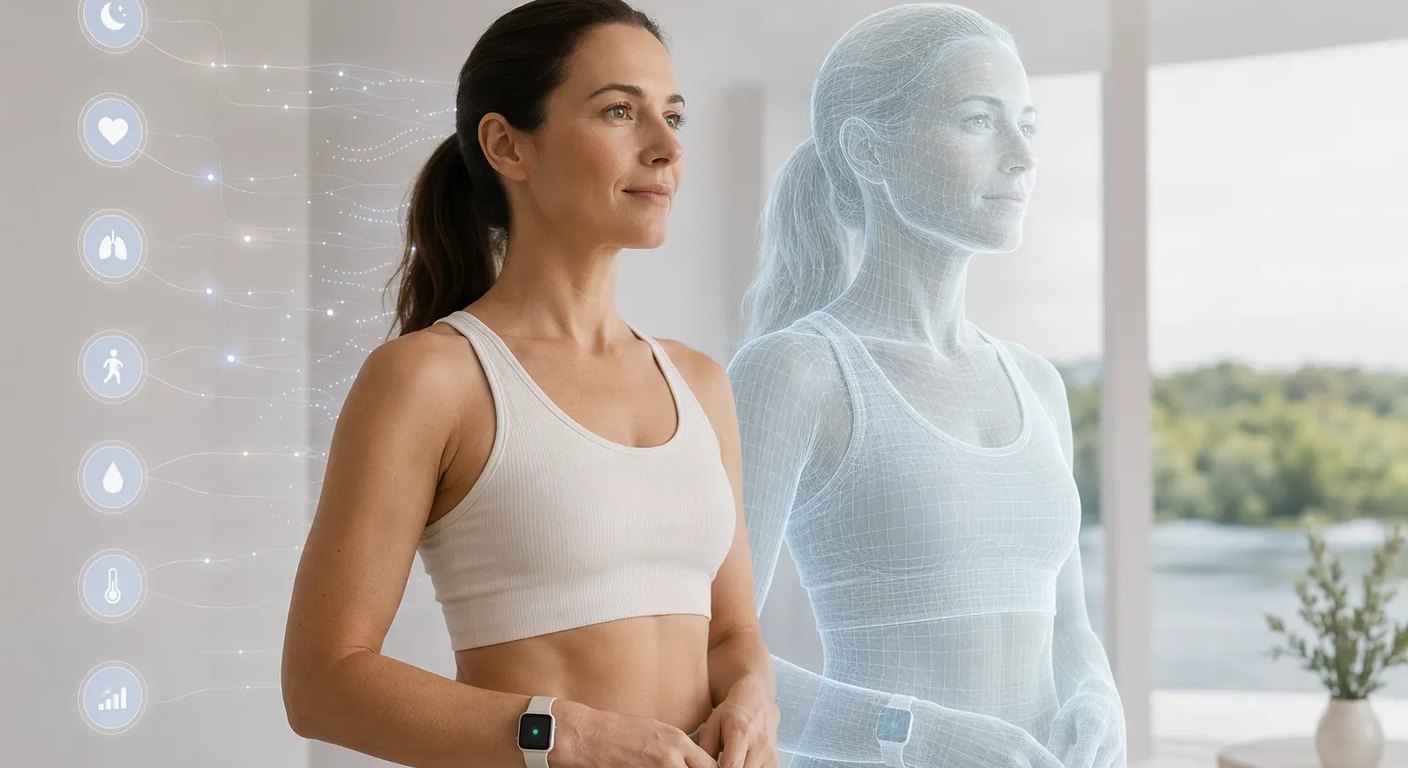
A virtual health twin is a digital representation informed by data about a person. Its purpose is to connect observations that would otherwise sit in separate records. It is not a complete copy of the body.
The idea comes from modelling complex systems. In health research, digital twins cover many approaches and levels of maturity [1]. A research model’s ability to simulate an outcome does not mean every consumer platform can predict a person’s future health.
What the data contribute
Three types of information can complement one another:
- Questionnaires describe habits, goals and personal context.
- Biological results, when included in a program, provide information from a sample collected at a particular time.
- Connected-device data, when a compatible connection is available, add observations about activity, sleep or other measured signals.
These sources have different limitations. A questionnaire depends on what is reported. A sample represents its collection period. A wearable produces estimates that depend on its sensors and algorithms. Adding more data does not automatically make an interpretation more accurate.
What following information over time can help with
A timeline can make a practical question easier to explore: did a change in routine coincide with a change in an observed indicator? It can also help you prepare more specific questions for a professional.
Coincidence is not proof of cause. Travel, illness, medication, measurement conditions and several simultaneous habit changes may affect the same period. A useful interpretation separates what was observed from what remains uncertain.
Using TwinMe with clear expectations
TwinMe brings personal context and program results into a wellness experience. Its Bio-Signatures organize information by the dimensions addressed by the selected program. Available analyses and connections depend on that experience.
TwinMe does not replace a medical consultation, clinical tests or prescribed care. A wellness score is not a diagnosis, a treatment recommendation or a prediction of disease.
Before sharing data, check which connection is supported, which permissions it requests and how to manage it. The privacy policy describes data use and applicable rights. The platform page shows the experience currently offered.
Source
- Katsoulakis E et al. Digital twins for health: a scoping review. npj Digital Medicine, 2024. doi:10.1038/s41746-024-01073-0. This review describes the research field; it does not validate every capability of a particular product.
Tags
Louis-Philippe Noel
Co-founder of BioTwin